
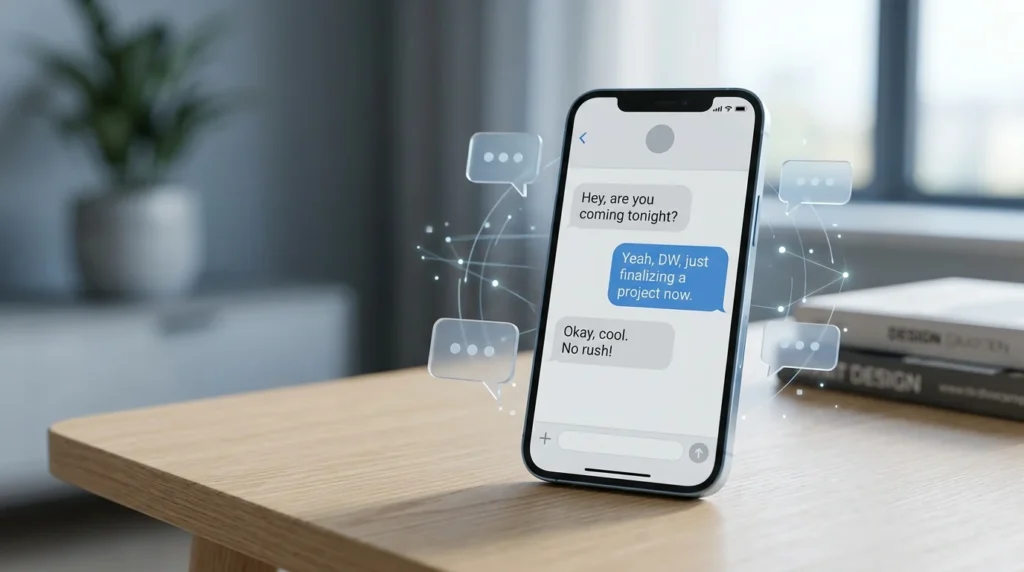

Have you ever received a text that simply says “dw” and wondered what those two letters mean?
In most texting and online conversations, DW means “don’t worry.” It is a common informal abbreviation people use to reassure someone, respond to an apology, calm a concern, or let them know that something is not a big deal.
For example:
“Sorry I’m late.”
“DW, take your time.”
Here, DW means “don’t worry.”
You may see DW in text messages, WhatsApp chats, Snapchat conversations, Instagram DMs, TikTok comments, group chats, and other casual online conversations. The meaning usually stays the same across these platforms, although the tone can change depending on the situation.
DW can also have another legitimate meaning: “dear wife” or “darling wife.” That interpretation is much more dependent on context.
So, if someone sends you “dw” by itself in a casual conversation, “don’t worry” is normally the meaning to consider first.
Meaning & Definition
DW is an informal texting abbreviation that most commonly means “don’t worry.”
People use it to tell someone:
- There is no need to worry.
- Everything is okay.
- The problem is not serious.
- They do not need to apologize.
- Something has already been handled.
- They should relax about a situation.
DW Meaning at a Glance
| Term | Most Common Meaning | Typical Use |
|---|---|---|
| DW | Don’t worry | Reassurance |
| DW about it | Don’t worry about it | Dismissing a concern |
| DW, I got it | Don’t worry, I got it | Reassurance/control |
| DW lol | Don’t worry | Casual or playful reassurance |
The lowercase “dw” and uppercase “DW” generally mean the same thing.
What Does DW Mean in Text?
DW means “don’t worry” in most text messages and online chats. It is a casual abbreviation used to reassure someone, tell them not to stress, or indicate that a problem is not important.
For example:
Person 1: “Sorry, I forgot to send the file.”
Person 2: “DW, you can send it later.”
The second person is saying “don’t worry.”
DW can also appear at the beginning, middle, or end of a message:
“DW, I already handled it.”
“You can take your time, dw.”
“DW about the test. You’ll be fine.”
In each example, the basic meaning is the same.
Read More: OOP Meaning in Text: What Does It Mean?
What Does DW Stand For?
In everyday texting, DW stands for “don’t worry.”
It is an initialism created from the first letters of Don’t Worry.
Unlike some slang expressions that have complicated or changing definitions, DW is relatively straightforward. The surrounding message mainly determines its tone, rather than changing its basic meaning.
For example:
“DW, it’s okay.”
sounds reassuring.
But:
“dw.”
after someone repeatedly apologizes could sound brief or slightly dismissive.
The letters still mean “don’t worry”; the conversational context changes how the message feels.
Background / Origin of DW
DW belongs to the broader group of abbreviations that developed through informal digital communication.
Text messaging, online chat, forums, and instant messaging encouraged people to shorten frequently used phrases. Expressions such as “don’t worry” were naturally easy to compress into DW because the first letters communicate the phrase quickly.
Modern dictionaries recognize DW as an informal abbreviation used in text messages and social media. Oxford lists both “don’t worry” and “darling wife/dear wife” as meanings of DW in informal digital communication.
There is no need to assume a specific person, website, or single event created the abbreviation. The important point is that DW became established as an informal shorthand for “don’t worry” in digital communication.
The alternative “dear wife” meaning is context-dependent. For example, if someone writes:
“My DW made dinner tonight.”
DW is unlikely to mean “don’t worry.” In that sentence, it refers to the person’s wife.
Therefore, the sentence surrounding DW is more important than the abbreviation alone.
DW in Different Contexts
DW in Texting
Texting is where you are most likely to encounter DW meaning “don’t worry.”
People use it when:
- Someone apologizes
- Someone is concerned
- Someone thinks they caused a problem
- Someone is nervous
- Someone needs reassurance
- A minor issue has been resolved
Example:
“Sorry I bothered you.”
“DW.”
Meaning: “Don’t worry about it.”
DW Between Friends
Friends commonly use DW because it is quick and informal.
“I might be 10 mins late.”
“DW, we haven’t left yet.”
Here, DW reassures the friend that being late is not a problem.
DW in Group Chats
In group conversations, DW can reassure several people at once.
“Guys, I forgot to book the table.”
“DW, I already did.”
The abbreviation can make the conversation feel relaxed rather than overly formal.
DW in DMs
DW is also common in private messages.
Someone might say:
“DW, I wasn’t upset.”
This can be especially useful when clarifying a misunderstanding.
DW in Formal Communication
DW is generally informal.
It is suitable for:
- Friends
- Family
- Casual conversations
- Social media
- Text messages
- Informal group chats
It is usually better to write “don’t worry” in formal emails, academic writing, official messages, or professional correspondence.
For example, instead of:
“DW about the deadline.”
A professional message would normally say:
“Please don’t worry about the deadline.”
DW on Social Media
The meaning of DW generally does not change simply because you see it on a different social media platform. Context still determines the intended meaning.
DW on WhatsApp
On WhatsApp, DW usually means “don’t worry.”
Example:
“Sorry I couldn’t call earlier.”
“DW, all good.”
It may also appear as:
“DW about it.”
DW on Snapchat
On Snapchat, DW can be used as casual shorthand between friends or people having private conversations.
Example:
“I accidentally opened your snap lol.”
“DW 😂”
The meaning is still generally “don’t worry.”
DW on TikTok
In TikTok comments or messages, DW can also mean “don’t worry.”
For example:
“DW, you’re doing great.”
The exact tone depends on the surrounding comment.
Read More: IGS Meaning in Text: What Does It Mean?
DW on Instagram
Instagram DMs and comments frequently use informal abbreviations.
A message such as:
“DW, I wasn’t ignoring you.”
means:
“Don’t worry, I wasn’t ignoring you.”
DW on Facebook Messenger
DW can be used naturally in Messenger conversations:
“Sorry for canceling.”
“DW, we can meet tomorrow.”
Again, the meaning is normally “don’t worry.”
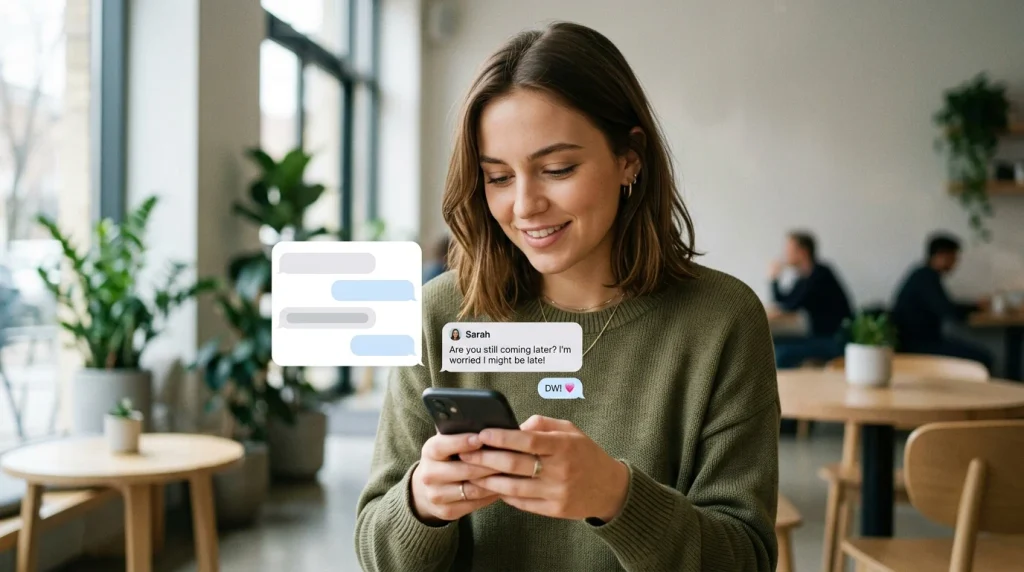
DW Meaning From a Girl
If a girl sends you “DW,” it normally means “don’t worry.”
The abbreviation itself does not have a special female meaning. You should interpret the message based on the conversation, relationship, tone, and what happened immediately before it.
Example 1
You: “Sorry, I replied so late.”
Her: “DW, it’s fine.”
This is most likely simple reassurance.
Example 2
You: “I hope I didn’t make things awkward.”
Her: “Dw lol.”
The “lol” can make the message feel more casual or lighthearted.
Example 3
You: “I’ll pay you back tomorrow.”
Her: “DW about it.”
Here, she is telling you not to worry about the situation.
Do not automatically assume that DW from a girl means she likes you, dislikes you, or is flirting. The abbreviation alone does not establish romantic interest.
DW Meaning From a Guy
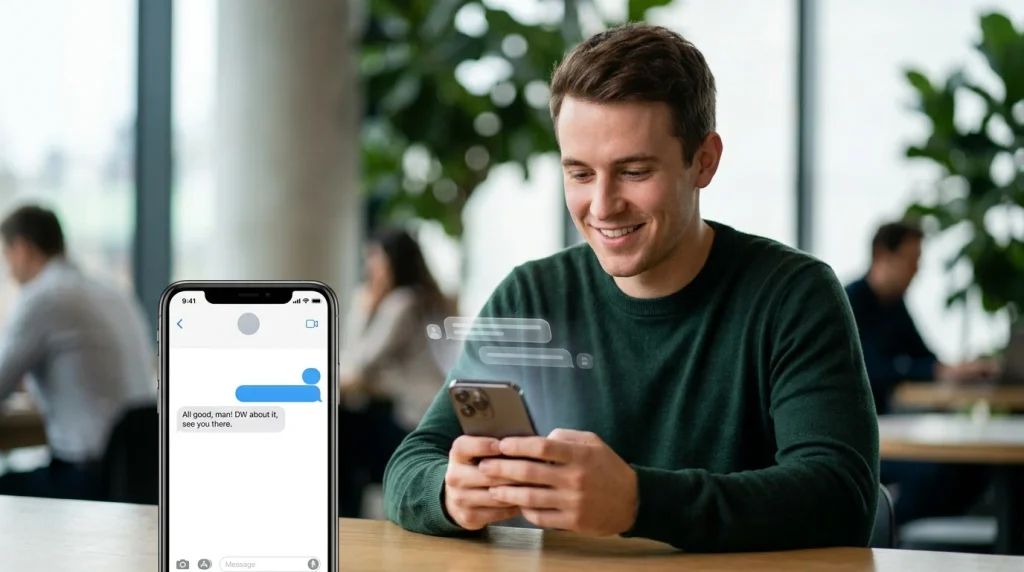
If a guy sends “DW,” the most common meaning is also “don’t worry.”
Example 1
There is no separate definition based on the sender’s gender.
You: “Sorry I forgot to bring it.”
Him: “DW, I’ll get it tomorrow.”
This is straightforward reassurance.
Example 2
You: “Are you mad?”
Him: “Nah dw.”
This means he is telling you not to worry.
Example 3
You: “I might be late.”
Him: “DW, we’re still here.”
Again, DW means “don’t worry.”
The important clues are the surrounding words and the situation, not whether the sender is a guy or girl.
Is DW Flirting?
DW is not inherently a flirting abbreviation.
Its primary meaning is simply “don’t worry.”
However, the context can make a DW message part of a friendly, affectionate, or potentially flirty conversation.
For example:
“DW, I’ll wait for you.”
That could be completely friendly.
But if two people are already flirting, the same message may feel more affectionate because of the broader conversation.
Compare:
Neutral:
“DW, I’ll send the notes later.”
Potentially affectionate:
“DW, I’ll wait for you. Take your time :)”
The romantic meaning comes from the overall interaction, not from DW itself.
So, if someone you like sends you “dw,” don’t treat the abbreviation alone as evidence of flirting.
Read More: LMFAO Meaning in Text: What Does It Mean?
DW in Dating & Relationships
DW can appear frequently in dating conversations because people often use it to reassure someone.
For example:
“Sorry, I don’t think I can meet tonight.”
“DW, we can go another day.”
Or:
“I’m worried you think I’m ignoring you.”
“DW, I know you’re busy.”
In a relationship, DW can communicate reassurance, patience, or emotional support.
However, it can also sometimes close a topic quickly:
“I’m sorry.”
“DW.”
Depending on the situation, the short reply may feel warm, neutral, or slightly dismissive.
On Dating Apps
Someone might use DW after a small mistake:
“Sorry, I accidentally unmatched you and had to find your profile again.”
“DW lol.”
Here, the person is simply saying that the mistake is not a problem.
The surrounding conversation is what determines whether there is romantic interest.
DW Tone & Context
Although the basic definition remains “don’t worry,” the tone can vary.
Positive
“DW, I got you.”
This sounds supportive.
Neutral
“DW, it’s fine.”
This is simple reassurance.
Friendly
“DW haha, no problem.”
The extra wording makes it warmer and more casual.
Playful
“DW, I’ll save you a slice.”
The abbreviation is part of a lighthearted exchange.
Flirty
DW itself is not flirty, but it can appear inside a flirty conversation.
“DW, I’ll wait for you ;)”
The flirting comes from the broader message.
Dismissive
A very short:
“dw.”
can sometimes feel dismissive if the other person is discussing something serious.
That does not create a new definition. It simply shows how tone and context affect interpretation.
DW Meaning in Real Text Conversations
Example 1: Apology
You: “Sorry I forgot to call.”
Friend: “DW, it happens.”
Meaning: Don’t worry; the friend is not treating the mistake as serious.
Example 2: Being Late
You: “I’ll be 15 minutes late.”
Friend: “DW, we’re not there yet.”
Meaning: Don’t worry about being late.
Example 3: Stress
You: “I’m really nervous about tomorrow.”
Friend: “DW, you’ll do great.”
Meaning: Don’t worry; the friend is reassuring you.
Example 4: Relationship
You: “Are you upset with me?”
Them: “No, dw.”
Meaning: They are telling you not to worry about being in trouble with them.
Example 5: Money
You: “I’ll send the money tonight.”
Friend: “DW, whenever you can.”
Meaning: There is no immediate concern about the payment.
Example 6: Group Chat
Person 1: “I forgot to bring the charger.”
Person 2: “DW, I brought one.”
Meaning: The problem has already been solved.
Read More: BC Meaning in Text: What Does It Mean?
Example 7: Potentially Dismissive
You: “I’m actually worried about what happened.”
Them: “dw.”
Meaning: Literally “don’t worry,” but the short response may feel dismissive because the issue is more serious.
How to Respond to DW
Your response depends on what the person means and the situation.
Casual Reply
“Okay, thanks!”
Friendly Reply
“Thanks, I appreciate it.”
“Got it.”
Simple Reply
Funny Reply
“Trying not to 😂”
Playful Reply
“Easy for you to say lol.”
Flirty Reply
If the conversation is already romantic:
“Only if you promise to help me relax.”
Or:
“Okay, but you owe me a little reassurance.”
You do not need a special response to DW. If the person is simply reassuring you, a simple “thanks” is usually enough.
Common Misconceptions About DW
Misconception 1: DW always means something romantic
Not true. DW normally means “don’t worry.” It does not automatically indicate flirting or attraction.
Misconception 2: DW has a different meaning when a girl says it
There is no standard female-specific definition. The meaning depends on context.
Misconception 3: DW always sounds friendly
Not necessarily. A short “dw” can sometimes sound cold or dismissive, especially during a serious conversation.
Misconception 4: DW only means “don’t worry”
In everyday texting, that is the dominant interpretation, but DW can also mean “dear wife” or “darling wife” in certain contexts.
Misconception 5: DW is appropriate everywhere
DW is informal shorthand. It is generally better to avoid it in formal professional writing.
Similar Terms & Alternatives
Several abbreviations and expressions can overlap with DW.
Don’t worry
The full phrase behind DW.
No worries
A natural alternative that can mean there is no problem.
NP
Often means “no problem.” It can be used when responding to an apology or request.
It’s okay
A direct reassurance that something is not a problem.
All good
A casual way to say everything is fine.
You’re good
An informal way to tell someone they do not need to worry.
No big deal
Means the situation is not important or serious.
NBD
Usually means “no big deal.”
These expressions overlap with DW but are not always interchangeable.
DW vs Similar Expressions
| Expression | Meaning | Tone | Common Context |
|---|---|---|---|
| DW | Don’t worry | Reassuring, casual | Texting, chats |
| NP | No problem | Casual, friendly | Replies, requests |
| NBD | No big deal | Casual | Minor problems |
| No worries | There is no problem | Friendly | Everyday conversation |
| All good | Everything is fine | Casual | Texting, social media |
| You’re good | You don’t need to worry | Reassuring | Friends, casual chats |
| It’s okay | The situation is fine | Neutral/friendly | Apologies, concerns |
The best choice depends on the sentence and the relationship between the people communicating.
Other Meanings of DW
Although “don’t worry” is the most relevant meaning in ordinary texting, DW has other legitimate interpretations.
Dear Wife
DW can mean “dear wife” in some informal online and personal contexts.
Example:
“My DW made an amazing dinner tonight.”
Here, “don’t worry” would not make sense. The context indicates that DW refers to the person’s wife.
Darling Wife
DW may also be used as “darling wife,” particularly in informal family-related or online conversations.
For example:
“My DW and I are traveling this weekend.”
Again, context makes the intended meaning clear.
Which Meaning Is Most Likely in a Text?
If someone sends:
“DW, it’s fine.”
the meaning is almost certainly “don’t worry.”
If someone writes:
“My DW is coming with me.”
the meaning is much more likely “dear wife” or “darling wife.”
The sentence surrounding the abbreviation is therefore the strongest clue.
Formal vs Informal
DW is informal texting shorthand.
It is appropriate for casual digital communication, including:
- Text messages
- Snapchat
- Instagram DMs
- TikTok
- Facebook Messenger
- Group chats
- Informal online conversations
It is generally not the best choice for:
- Formal emails
- Business reports
- Academic assignments
- Legal documents
- Official correspondence
Instead of:
“DW about the delay.”
a formal message could say:
“Please don’t worry about the delay.”
The full phrase is clearer and more professional.
FAQs
What does DW mean in texting?
DW usually means “don’t worry” in texting. It is an informal abbreviation people use to reassure someone, respond to an apology, calm a concern, or say that something is not a serious problem. For example, “Sorry I’m late” followed by “DW” means “don’t worry about being late.”
What does DW stand for in text?
In ordinary texting, DW stands for “don’t worry.” It is formed from the first letters of “don’t” and “worry.” The abbreviation is commonly used in casual messages, chats, and social media. In some contexts, DW can also mean “dear wife” or “darling wife.”
What does DW mean from a girl?
If a girl sends “DW,” it normally means “don’t worry.” It does not automatically have a special romantic meaning. Whether the message sounds caring, neutral, playful, or dismissive depends on the conversation, wording, and relationship between the two people.
Does DW mean flirting?
DW does not inherently mean flirting. Its standard texting meaning is “don’t worry.” It can appear in a flirtatious conversation, but the romantic tone would come from the surrounding conversation rather than the abbreviation itself. Context, previous messages, and the relationship between the people matter more.
What does DW mean on WhatsApp, Snapchat, or Instagram?
On WhatsApp, Snapchat, Instagram, TikTok, and similar platforms, DW usually means “don’t worry.” The platform normally does not change its meaning. For example, “DW, you’re fine” is simply a casual way to reassure someone that there is no problem.
Conclusion
The most common DW in text meaning is “don’t worry.” It is a short, informal abbreviation used to reassure someone, respond to an apology, calm a concern, or communicate that something is not a big deal.
You may see DW in text messages, group chats, WhatsApp, Snapchat, Instagram, TikTok, Facebook Messenger, and other forms of casual online communication. The basic meaning usually stays the same across platforms.
The tone, however, can change. “DW, you’re fine” may sound caring, while a standalone “dw” during a serious conversation could feel brief or dismissive. That is why the surrounding conversation matters.
If a girl or guy sends you DW, there is no separate gender-specific definition. It normally means “don’t worry,” and you should look at the context before assuming anything romantic. DW itself is not a flirting term, although it can appear in a flirtatious conversation.
There is also a legitimate alternative meaning: “dear wife” or “darling wife.” This interpretation becomes more likely when DW appears in a sentence referring to someone’s spouse.
For everyday texting, though, the safest first interpretation is simple: DW = don’t worry.


Pingback: OMS Meaning in Text: What Does It Mean?
Pingback: ionk Meaning in Text: What Does It Mean?
Pingback: ALT Meaning in Text: What Does It Mean?